My friend Quinn Sine—an excellent poet—has just started his own poetry blog! I’d appreciate it if you gave him a follow. His immaculate, refreshing style and striking imagery never cease to amaze me!
Dear followers, I have returned with an exciting project—Life Rattle Press has published my debut novel about a young woman escaping the Russian Empire.
Book Summary:
Saint Petersburg, 1905. Amid civil unrest, Margarita boards the train to Paris, escaping the claws of the Russian Empire’s ruthless regime. At war with its neighbours, her homeland collapses, leaving millions of broken lives in its wake. Recounting her past to the woman who saved her, Rita takes the readers to the icy gates of Siberia, the colonnade of St. Isaac’s Cathedral, and the stage of the Mariinsky Theatre.
The Dawn of Eternal Winter is the debut novel by a Russian-Canadian writer, Veronika Sizova. A daring psychological thriller with romance, fantasy, and suspense, this text synthesizes past and present, beauty and terror, insurgence and war. Set in a fictionalized version of pre-revolutionary Saint Petersburg, this tale of loss, grief, and betrayal becomes a window into the cold authoritarian world where love and freedom are against the law, but the fire of hope burns.
P.S. If you love LGBTQ+ historical fiction, you won’t be disappointed!
1. Social Media encourages engagement between politicians and their supporters.
Even though it may not seem so at a glance, political campaigns and social media campaigns follow the same structure that allows a deeper engagement between the politician and their audience, “Social media really just makes it easier for politicians to find, listen to, and engage with their supporters during their election campaigns” (Jenn 2019).
Although traditional news organizations were successful for centuries, their time is almost gone, with new, inventive companies like BuzzFeed gradually taking their place and stealing their readership. “BuzzFeed’s journalists think they are more attentive to audiences and more willing to experiment than those working in traditional news organizations,” Tandoc and Foo argue (2018). However, their journalistic standards remain the same, and it is the approach itself (more interactive, user-experience-oriented content) that is different.
It is always great to have a clear plan in mind! Think about your brand in advance and sketch some of the goals that you would like to achieve. When I first thought about creating “The Waves of Poetry,” I wrote a brief introduction to the website’s goals, the edited version of which you can still find at the top of my homepage.
Then, list how you will measure whether your campaign has achieved its goals or not (Nimble 2012). This can be something quantitative and straightforward, such as like count, but it can also refer to qualitative data, such as user feedback and reviews.
Keep in mind all the promotional rules of the platform you are using and include them in your plan (for instance, come up with the list of keywords that would be popular in the search engine of a particular network) (Nimble 2012).
“These days I find that I’m getting paid more for a sponsored tweet or Instagram post that takes less than a minute, than I do for actual journalism,” repeat many digital media journalists each year as social media platforms take over the traditional news outlets, thus forcing many people to change the initial route of the careers in the journalistic field (Spike 2017). Freelance journalists often have to deal with a “slow response rate from the editors and delayed payments,” so they have to take up other writing projects for additional income (Spike 2017).
When it comes to online content creation, transparency is key. Developing a strong level of trust is an essential skill for any blogger, and it is especially relevant for writers because words can hide so much! Remember that “the Web is active 24/7 and has cameras on all angles,” so there is no benefit in hiding the facts or submerging the truth – one day, it will reach the surface, anyway, because the Internet sees everything (Brohgan and Smith, 2019). Therefore, the best tactic would be never to attempt hiding anything in the first place! Tell the audience your true intentions, and you will be paid back with more trust and support than you could imagine!
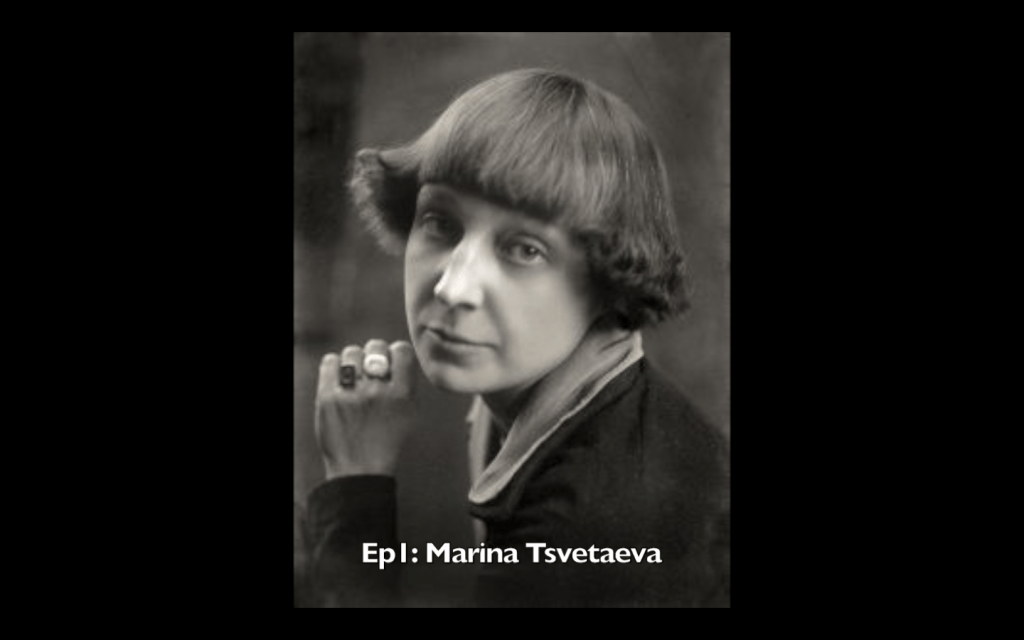
Are you interested in LGBTQIA+ literature? Do you want to learn more about the less-known sapphic authors from different eras and corners of the world? Then, this podcast is perfect for you! Hosted by Veronika Sizova, the first episode of “Sapphic Literature” covers the life and work of Marina Tsvetaeva, an early-twentieth-century Russian poet. This episode also presents the reading of the first poem from her cycle, “Girlfriend,” dedicated to Sophia Parnok, and elaborates on the historical context of this publication, as well as the lyrical imagery that Tsvetaeva used in the poem. The listeners are welcome to participate in the poll and choose the author for the next episode!
When I let go of your hand many moons ago, deep down, I knew I would never hold it again. I still see your ghost, now and then, hovering over the cliffs and mingling with the mist between the mountains… At sunset, your shadow haunts the valley where we used to dream. We made up stories; we gathered berries and laughed; we conjured up entire lives, intertwining our thoughts like grapevines and drinking their mellow nectar until we were intoxicated with passion.
Illustration: Rêverie au clair de lune by René Balades (French, 20th century)
My Translation:
***
Midnight—over the coffee grounds
She cries, looking toward the East.
Her mouth is innocent and unbound,
Half—a flower, and half—a beast.

Soon a crescent—young and slender—
Shall replace the scarlet dawn
All my combs I will surrender,
All my rings - to you alone!

Waxing moon between the branches
Did not shelter anyone.
I will give you all my bracelets,
All my chains - to you alone!

As though under a heavy mane
Your luminous pupils shine!
Are your comrades jealous in vain? -
The full-blooded horses stay light!

(December 6, 1914)






 The Waves of Poetry